
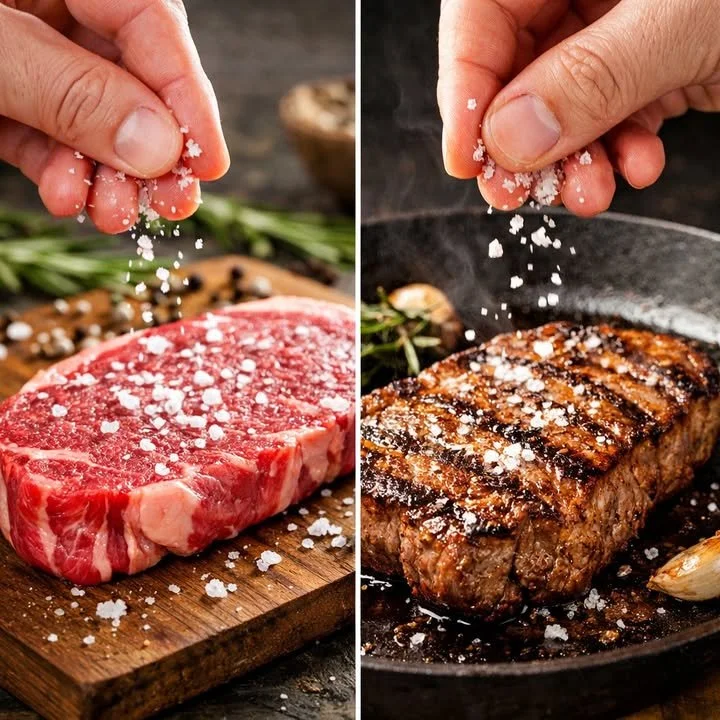
Salting meat is a topic that stirs up plenty of debate in the culinary world. Whether you’re a seasoned chef or a home cook, you may have found yourself pondering this question: Should you salt your meat before or after cooking? In my culinary adventures, I’ve experimented with both methods, and I can tell you there’s a certain magic that happens depending on when you choose to season your meat. Let’s dive into the art of salting meat—it’s more than just flavor; it’s a technique that can elevate your dishes to the next level.
What Makes This Recipe Special
There are many reasons to explore the method of salting meat, and your taste buds will certainly thank you for it. Whether you’re prepping for a cozy weeknight dinner or an elaborate holiday feast, understanding when to salt your meat can easily enhance the flavors and textures of your dishes. Salting meat enhances its natural flavors, helps with moisture retention, and contributes to that mouthwatering crust we all love.
“Salting my steak before cooking it transformed the flavor! It was juicy, tender, and absolutely delicious!” – A satisfied home cook
The Cooking Process Explained
Making the decision about when to salt meat can feel overwhelming, so let’s break it down. The process involves understanding how salt interacts with meat at different stages. When you salt meat before cooking, you allow it to absorb moisture and flavors, while salting after cooking can enhance the surface seasoning and create that delightful crust. Here’s how it all comes together:
- Start by assessing your meat—steaks, pork chops, chicken, or any cut of your choice.
- Decide if you’ll be using a dry brine (salting before) or just a light seasoning after cooking.
- Keep in mind the thickness of the meat; thicker cuts benefit more from pre-salting.
- Allow time for the salt to do its magic—at least 40 minutes before cooking for optimal results.
What You’ll Need
- Salt: kosher or sea salt works best for even seasoning.
- Meat: your choice of protein, such as steak, chicken, or pork.
- Optional spices: black pepper, garlic powder, or herbs.
- Cooking oil: for searing.
Feel free to adjust the amount of salt based on your preference and dietary needs, and remember that not all salt is created equal!
