
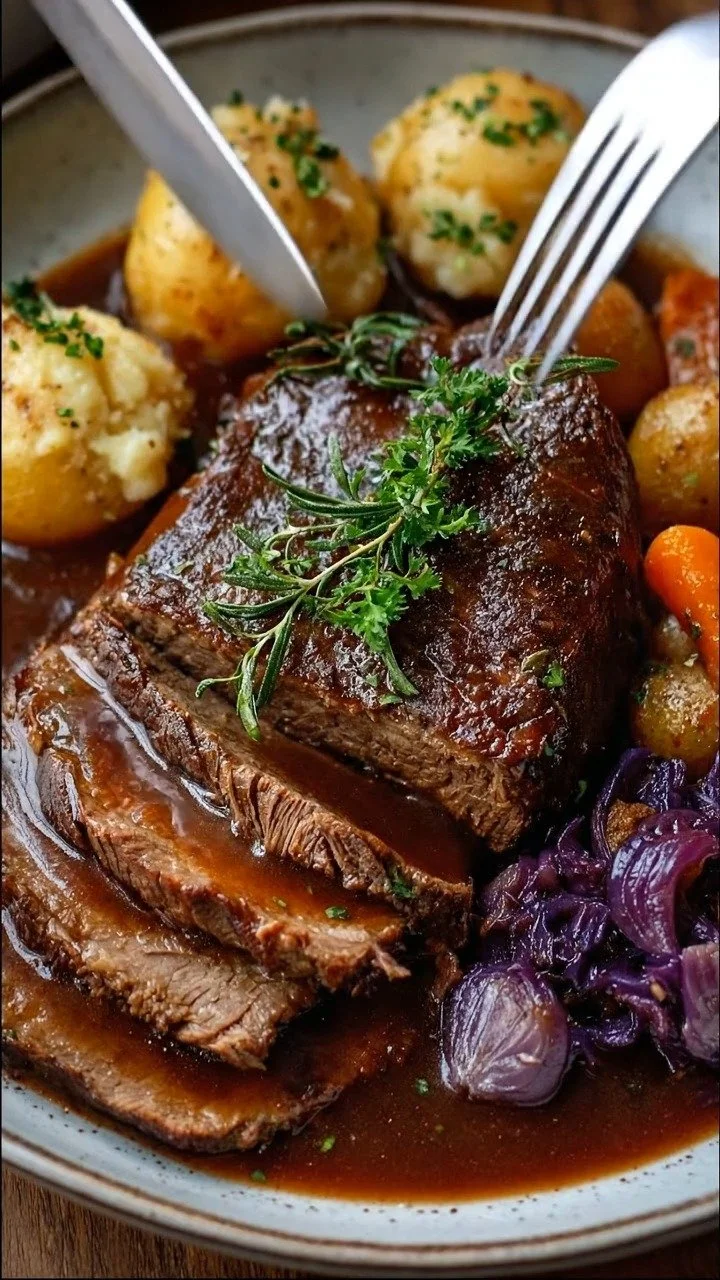
Traditional Sauerbraten (German Pot Roast) is not just a recipe; it’s a warm embrace from the heart of German cuisine. Imagine a tender pot roast, marinated for days in a rich concoction of vinegar and spices, transforming into something extraordinary. This dish is a staple in many German households, often reserved for special occasions and family gatherings. The deep flavors of the marinade, combined with the slow cooking process, yield a roast that’s as comforting as it is impressive. Trust me, once you try it, you’ll understand why Sauerbraten holds such a special place on dinner tables everywhere.
Why you’ll love this dish
This recipe brings a wealth of benefits that make it a must-try in your kitchen. First and foremost, Sauerbraten’s marinade not only tenderizes the beef but infuses it with a unique, tangy flavor that’s hard to resist. It’s perfect for those chilly evenings when all you want is something warm and satisfying. Plus, it’s budget-friendly, making it accessible for weeknight dinners or special holiday feasts.
"This Sauerbraten was the tenderest I’ve ever made! The flavors were spot on, and my family couldn’t stop raving about it. I’ll definitely be making it again!" – A satisfied home cook
Step-by-step overview
Creating the perfect Sauerbraten is a labor of love, but the resulting flavors are well worth the wait. The process begins with marinating your beef roast for several days, allowing it to soak up the beautiful, tangy flavors before the slow cooking transforms it into a succulent masterpiece. Follow these easy steps, and you’ll be on your way to a delicious meal that might just become a family favorite.
What you’ll need
To prepare this traditional dish, here’s the list of ingredients you’ll need:
- 2 pounds beef roast
- 1 cup red wine vinegar
- 1 cup water
- 1 tablespoon sugar
- 2 bay leaves
- 1 onion, sliced
- 2 cloves garlic, minced
- 1 teaspoon black peppercorns
- 1 teaspoon salt
- 1 tablespoon vegetable oil
- 1 cup beef broth
Feel free to experiment! For a milder flavor, consider swapping the red wine vinegar with white vinegar. The key is to maintain that tender texture of the roast while achieving the right balance of flavors.
