
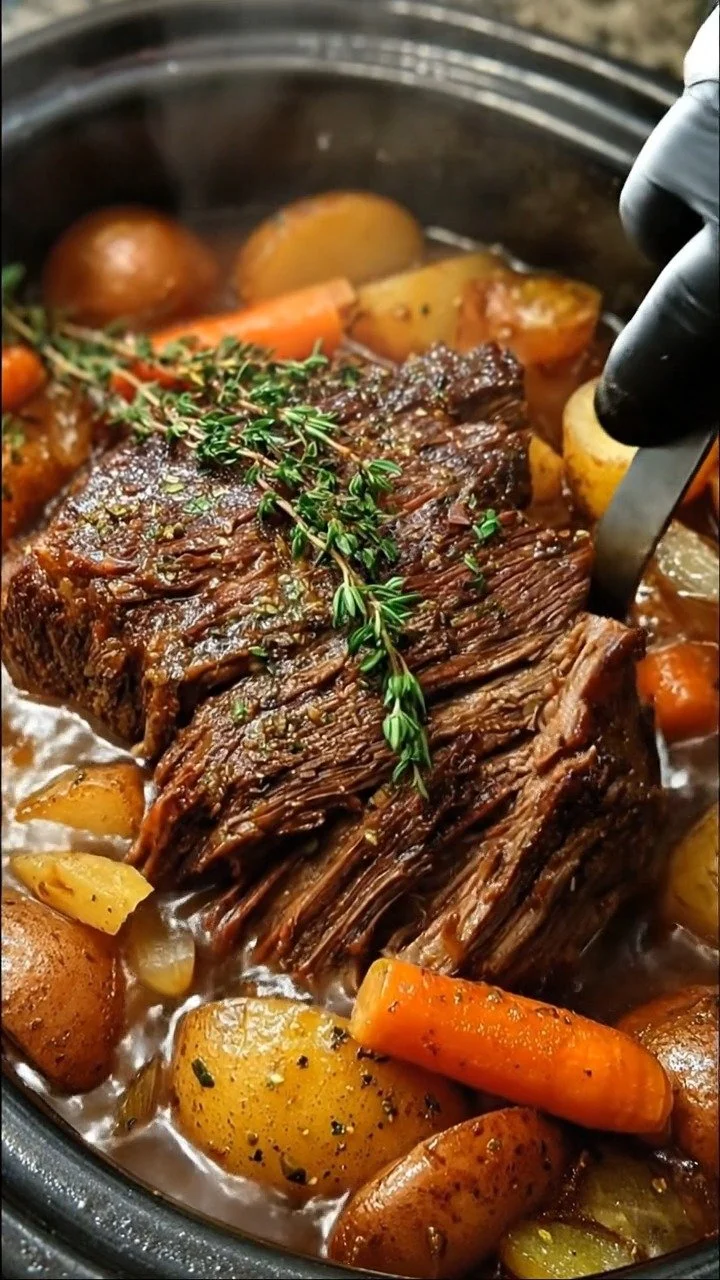
Pot roast has this incredible ability to transform a simple cut of beef into a comforting, hearty meal that evokes feelings of home. My first pot roast was a slow-cooked masterpiece that filled the house with irresistible aromas, sending everyone running to the dinner table. This Classic Slow Cooker Pot Roast is the perfect recipe for those busy weeknights or family gatherings when you want to serve something that doesn’t just satisfy hunger but also warms the soul.
Why you’ll love this dish
What makes this recipe special is not only the depth of flavors that develop during slow cooking but also its simplicity. It’s an ideal choice for busy lives. Toss everything into the slow cooker in the morning, and by dinner time, you’ll have a tender, succulent roast with perfectly cooked vegetables. This dish is budget-friendly; the ingredients are easy to find and can be adjusted to fit any season. It’s also a crowd-pleaser—kids and adults alike will love the savory, hearty flavors.
"This pot roast is hands-down the best I’ve ever made! I followed the recipe exactly, and the beef was melt-in-your-mouth tender. My family devoured it!" – A happy home cook
Preparing Classic Slow Cooker Pot Roast
What’s exciting about making a Classic Slow Cooker Pot Roast is how straightforward it is. The process is quite forgiving, allowing even novice cooks to create a delicious meal. Here’s how we’ll do it: first, we’ll season and sear the beef for depth of flavor before transferring it to the slow cooker with hearty vegetables. The beef broth and spices work together to create a rich sauce that infuses everything with flavor.
What you’ll need
Here’s a handy list of what you’ll gather before diving into this slow-cooking adventure:
- 3–4 lb beef chuck roast
- 2 tsp kosher salt
- 1 tsp black pepper
- 4 carrots, chopped
- 4 potatoes, diced
- 1 onion, sliced
- 4 cups beef broth
- 2 tsp dried thyme
- 2 tsp garlic powder
- 2 bay leaves
Feel free to swap the root vegetables or herbs based on what you have. For instance, parsnips can replace carrots, or fresh herbs could be used instead of dried.
