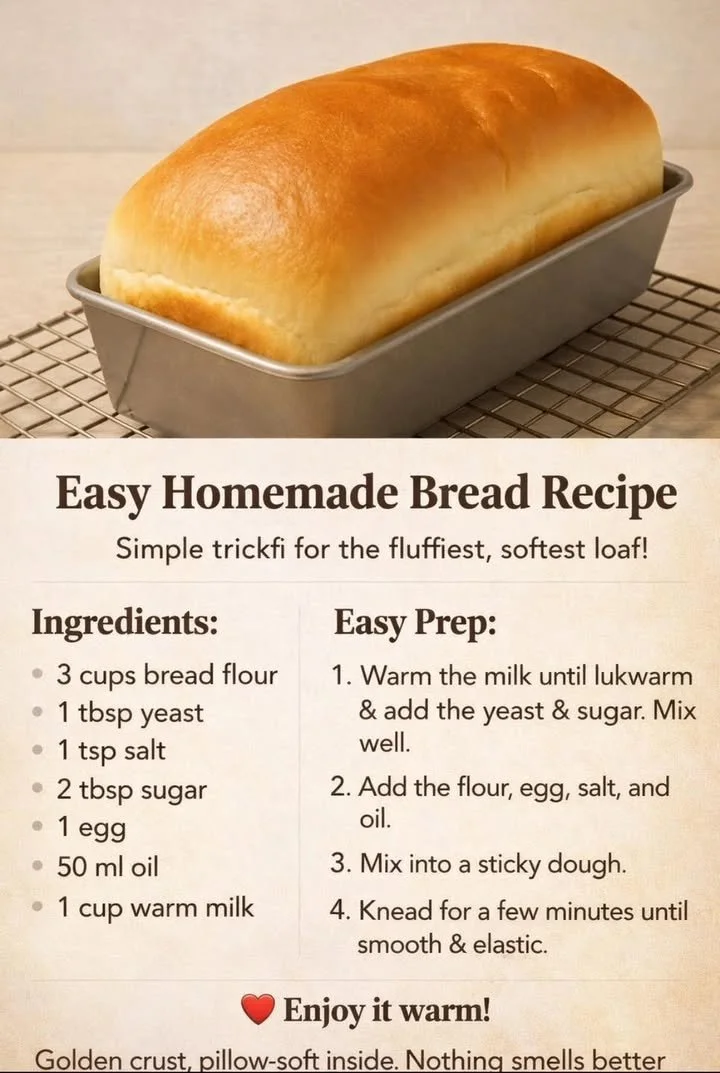
Step-by-Step Instructions
Now let’s dive into the detailed process of making your bread. Follow these steps carefully:
Activate Yeast: Begin by warming the milk until it’s lukewarm (around 110°F/43°C). Stir in the yeast and sugar, then let it sit for 5-10 minutes until it becomes foamy.
Mix Ingredients: In a large mixing bowl, add the flour, egg, salt, and oil to the yeast mixture.
Form Dough: Combine everything to create a sticky dough.
Knead: On a floured surface, knead the dough for about 8-10 minutes until it’s smooth and elastic. The dough should be soft and slightly tacky, but not excessively sticky.
First Rise: Place your dough in a lightly greased bowl. Cover it with a clean kitchen towel and set it aside in a warm place for about 1 hour or until it’s doubled in size.
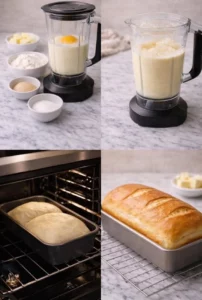
Shape: After the first rise, punch down the dough to release any trapped air. Shape it into a loaf and place it in a greased 9×5 inch loaf pan.
Second Rise: Cover the loaf again and let it rise for another 30-45 minutes, until it has risen above the rim of the pan.
Bake: Preheat your oven to 350°F (175°C). Bake the loaf for 30-35 minutes until the top is a beautiful golden brown and sounds hollow when tapped.
Cool: Once baked, remove it from the oven and let it cool in the pan for 5 minutes. Then, transfer it to a wire rack to cool completely.
Best Ways to Enjoy It
Freshly baked bread is delicious on its own, but there are endless possibilities for pairing! Here are some delightful serving suggestions:
- Toast: Simply slice and butter it while it’s still warm for a classic treat.
- Sandwiches: Use it to make hearty sandwiches filled with your favorite ingredients.
- Dips: Pair with olive oil, balsamic vinegar, or a homemade hummus for a fantastic appetizer.
- Breakfast: Serve with jam, honey, or cream cheese for a delightful breakfast option.
Keeping Leftovers Fresh
To ensure your homemade bread stays fresh and delicious, follow these storage tips:
- Room Temperature: Store in a sealed bag or container at room temperature for up to 3 days.
- Refrigeration: You can refrigerate the bread for up to a week, but this may dry it out.
- Freezing: To freeze, wrap the bread tightly in plastic wrap and place it in a freezer bag. It can be frozen for up to 3 months. Thaw at room temperature or in the microwave.
Helpful Cooking Tips
Here are some practical tips to make your bread-making process even smoother:
- Kneading by Hand: If you find the dough too sticky, a little flour on your hands can help.
- Yeast Activation: Always ensure your milk isn’t too hot, as high temperatures can kill the yeast.
- Warm Environment: If your kitchen is cold, place the dough in an oven with the light on to create a warm surroundings for rising.
Creative Twists
If you’re feeling adventurous, try these variations for a fun twist on your homemade bread:
- Herb Loaf: Add dried herbs like rosemary or thyme to the dough for an aromatic touch.
- Cheese & Garlic: Incorporate shredded cheese and minced garlic before the first rise for a cheesy garlic bread.
- Sweet Breads: Mix in cinnamon and raisins for a sweet breakfast option.
Common Questions
How long does it take to make this bread from start to finish?
From start to finish, including rising times, it typically takes about 2-3 hours.
Can I substitute any ingredients?
Yes! All-purpose flour can replace bread flour, and you can use any vegetable oil in place of the oil specified.
What if my yeast doesn’t foam?
If your yeast doesn’t foam after being mixed with warm milk and sugar, it may be old or the milk was too hot. It’s best to start with fresh yeast.
Embrace the warmth and satisfaction of baking your homemade bread. Enjoy the process, and soon you’ll find yourself creating loaf after loaf, each one a little more special than the last!